Building a partner network nonprofits actually trust
Nonprofit tech isn’t about features. It’s about trust, time, and impact.

Nonprofit tech isn’t about features. It’s about trust, time, and impact.
And the fastest way to lose credibility in this market is to treat your partner ecosystem like a checkbox.
Nonprofits are mission-driven, resource-constrained, and deeply relationship-oriented. They don’t buy technology for novelty. They adopt it to raise more funds, build stronger donor relationships, and reduce the operational drag that burns out small teams.
If you’re a tech company serving nonprofits, your software is only part of the equation. The real question nonprofits are asking is simpler:
Can I trust this platform and the ecosystem around it to help me deliver on my mission?
That’s why building a partner network nonprofits actually trust isn’t a nice-to-have. It’s the strategy.
Why nonprofits need a different kind of partner network
You can’t apply the standard B2B SaaS partnerships playbook here. The nonprofit market plays by different rules.
Tight budgets. Tighter time.
Most nonprofit teams are running lean. Every dollar is scrutinized. Every hour matters. There’s little patience for tools that require heavy configuration, manual workarounds, or constant data cleanup.
What nonprofits value most is automation that actually works. Fewer spreadsheets. Fewer imports. Less duct tape holding systems together.
A strong partner network fills those gaps. Integrations and specialized partners act as force multipliers, extending what a small internal team can realistically handle. When partners reduce friction instead of adding complexity, trust follows.
Trust beats tech specs every time
Nonprofits don’t shop like typical SaaS buyers. They rarely have the time or staff to evaluate dozens of tools in isolation.
Instead, they rely on people and organizations they already trust.
Agencies that manage donor communications. Consultants who understand fundraising strategy. Peer nonprofits who have already tested the stack. Even adjacent software vendors who know the space well.
In this world, partners are not resellers. They are trusted advisors. And often, they are the reason a nonprofit discovers your product in the first place.
If your partner network isn’t credible, your product won’t be either.
Less jargon. More relevance.
You’ll hear nonprofits talk about donor journeys, retention, recurring giving, and having a single source of truth for donor data. You won’t hear them debating API design patterns.
They don’t want to become technologists. They want technology that supports their work quietly and reliably.
This is where a thoughtful ecosystem matters. Partners who provide training, implementation support, or purpose-built integrations help nonprofits adopt technology without feeling overwhelmed. The result is faster time to value and far more confidence in the platform as a whole.
Connecting the dots in a smaller, more intentional ecosystem
The nonprofit tech ecosystem is smaller than martech or sales tech, and that’s a good thing.
It means you can be selective. Intentional. Opinionated.
Instead of chasing hundreds of shallow integrations, the strongest nonprofit platforms focus on building a cohesive ecosystem. One where partners share values, understand the market, and genuinely complement each other.
This is where marketplaces and developer experiences stop being “nice product features” and start becoming trust infrastructure.
A well-designed integration marketplace makes it clear which tools belong together. A clear partner directory signals credibility. An accessible developer portal allows third parties to extend your platform in ways your internal team never could alone.
Together, these pieces turn your product into a platform nonprofits can build on, not just buy from.
How Virtuous builds trust at scale
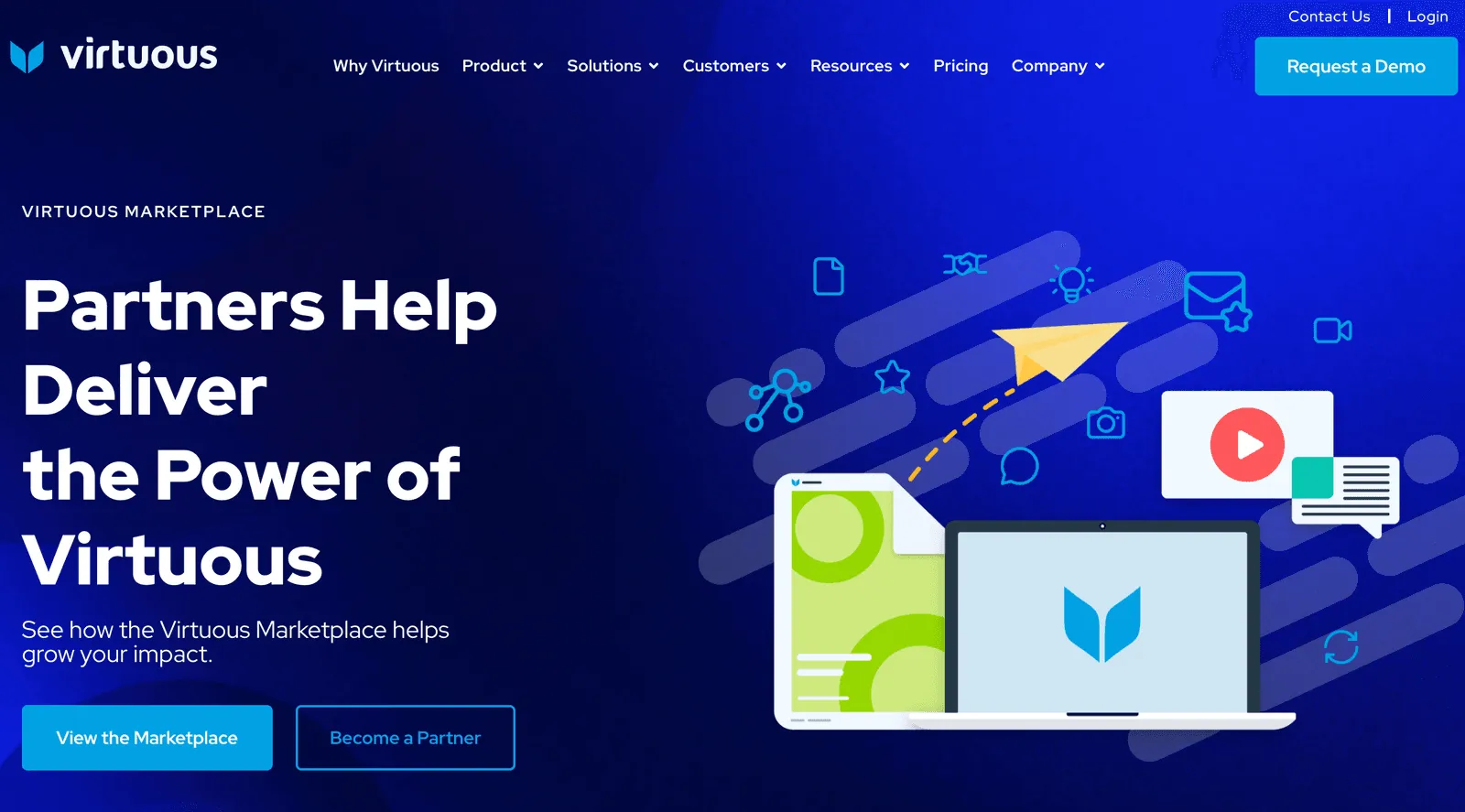
Virtuous didn’t just launch integrations and call it a day. They built an intentional partner ecosystem designed around how nonprofits actually work.
By using Partner Fleet to manage and showcase their partner network, Virtuous makes it easy for nonprofits to discover trusted partners, understand how tools fit together, and adopt new capabilities with confidence.
This isn’t about volume. It’s about clarity and credibility, at scale.
Check out the Virtuous case study.
What a trustworthy partner network really delivers
A trustworthy partner network isn’t a logo wall. It’s a set of outcomes nonprofits can feel.
- If your ecosystem doesn’t reduce burnout, it won’t earn trust.
Partners should eliminate manual work, automate key workflows, and give nonprofit teams back time they don’t have. - If your integrations don’t improve donor visibility, they won’t matter.
Nonprofits expect a unified view of donor data. When partners help create that single source of truth, personalization and retention follow naturally. - If your partners can’t guide nonprofits, they won’t rely on them.
Agencies and specialized vendors provide expertise nonprofits can’t hire in-house. That guidance is often more valuable than the software itself. - If your ecosystem doesn’t increase impact, it’s just noise.
The end goal is always the same: more generosity, stronger supporter relationships, and greater community impact.
Building a partner network nonprofits actually trust is one of the most powerful levers nonprofit tech companies have. When trust is designed into your ecosystem, adoption accelerates, relationships deepen, and your platform becomes part of how nonprofits operate, not just another tool they tolerate.
Ready to build a partner network that nonprofits trust and rely on?
Learn how with Partner Fleet.
Book a demo
Keep reading
Browse all posts
How Phenom turned 200 idle partners into $500K+ in partner program revenue
How Phenom built a tiered partner program and earned $500k+ in partner program revenue in under one year.

Partner Fleet launches In-App Marketplace, bringing integration adoption inside the product
The new module gives companies a conversion-optimized integration experience for their customers, plus the analytics to prove what integrations are worth.
Partnerships in 2026: Retention is the real growth lever
Get it right early, and you'll have a great year.