
Your guide to building an integration hub without losing your mind
This guide covers audience, core components, & build vs. buy decision.
Let’s be honest. In today’s SaaS world, your product isn’t judged on features alone. It’s judged on how well it plays with everything else your customers use. If connecting your product to their stack feels like work, they’ll move on to something easier.
That’s where an integration hub comes in. Not as a checkbox, but as real ecosystem infrastructure. The question is: what should it look like, and how do you build one without putting half your roadmap on pause?
What is an integration hub?
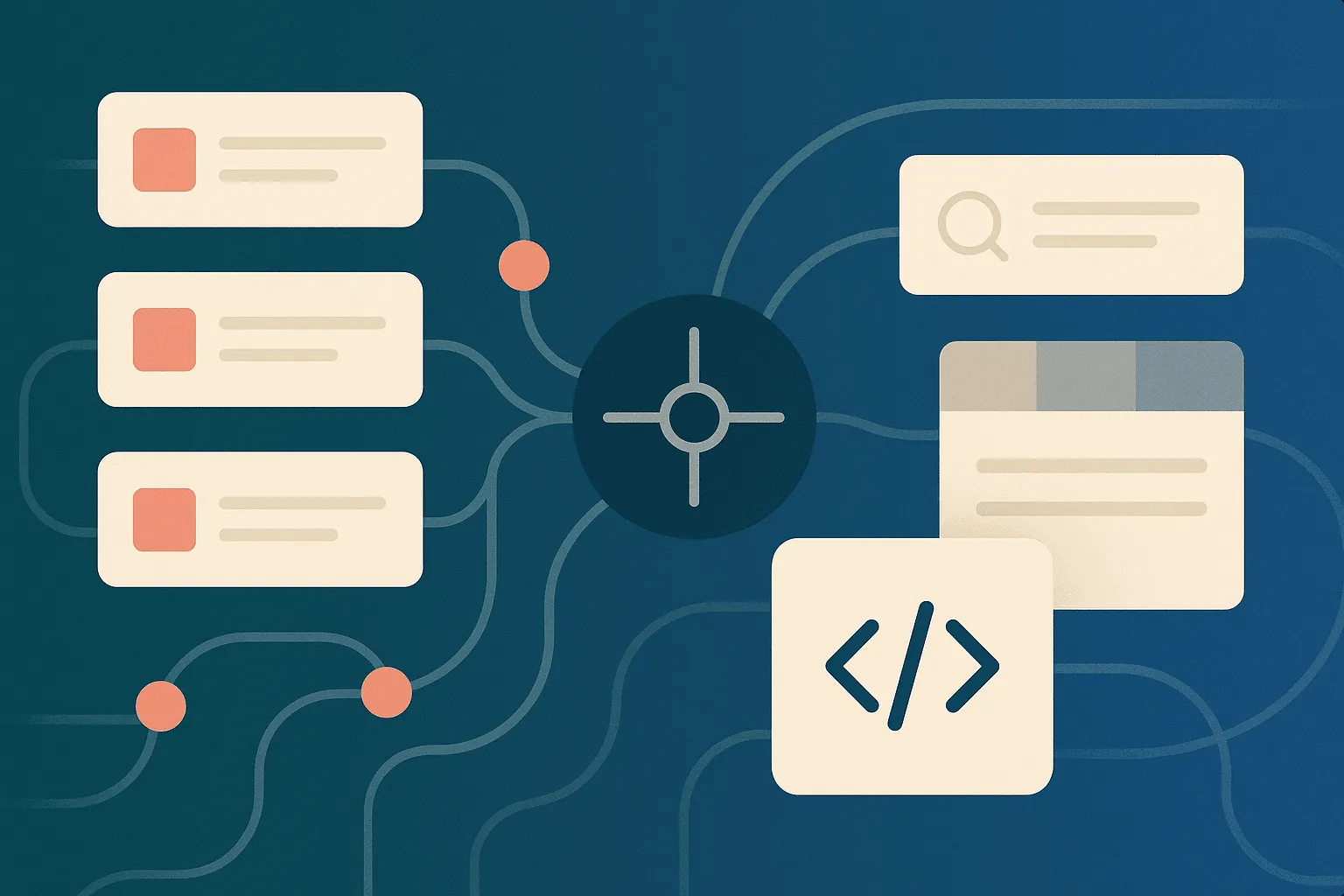
Picture a central station for your product’s ecosystem, the place where customers go to explore what your product can connect to and why it matters. A good hub introduces integrations the way a great salesperson does: with context, benefits, and a clear next step. It’s not just an API list. It’s your product showing up as part of a bigger solution instead of a standalone tool.
When it’s working well, users don’t think about “setup” or “configuration.” They just find what they need, understand what it unlocks, and get connected.
Want an out-of-the-box dev portal?
We'll walk you through Partner Fleet's capabilities and scope out your integration hub needs.
Let's talk
Why an integration hub matters
An integration hub isn’t a vanity project. It drives some of the hardest metrics to move: retention, expansion, product stickiness, and even net-new acquisitions.
When users see their stack reflected back to them, your product instantly feels more valuable. When they can activate integrations without submitting a ticket, support volume drops. When partners know there’s a clear place to showcase their work, your ecosystem starts growing on its own.
And, frankly, most of your competitors already have one. The question is whether yours helps users take action, or just sits there collecting dust.
Who you’re building it for
A strong hub serves two big audiences: the people using your product, and the people powering your ecosystem.
For customers, it’s all about clarity. They want to find integrations quickly, understand what each one does, and turn them on without friction. This is where clean pathways beat dense technical docs.
For internal teams and tech partners, the hub becomes infrastructure. Product uses it to track demand. Partnerships uses it to attract new partners and showcase existing ones. Marketing and sales use it to tell a richer story about your platform. And developers use it to understand how to build and how to get listed. When this ecosystem works in sync, your integration program becomes a growth engine instead of an internal project.
Mapping the experience
Before you design anything, think about how each audience will move through the hub.
A customer’s journey usually starts with discovery. They land on your website or inside your app and want to know, “Does this work with the tools I already use?” From there, they browse, skim benefits, and either connect the integration or dig into a bit more guidance. If they hit friction at any point, adoption drops.
Partners and internal teams take a different path. They’re evaluating how integrations get showcased, how new ones get added, and how easily a potential partner can build something and submit it. This is where a connected developer portal becomes critical. Tools like Partner Fleet’s developer portal pull your whole ecosystem into one flow: learn the APIs, build, submit, publish. More partners building means more integrations in your hub.
When those journeys feel natural, your hub becomes a true ecosystem entry point, not a static library.
What to include in your hub
A great integration hub feels simple on the surface and sophisticated underneath. Users should be able to search, filter, and discover quickly. Each integration needs a clear story: what it is, who it’s for, and why it matters. Setup should feel like a guided path, not a scavenger hunt.
A few things help the whole system feel alive: featured integrations, categories or tags that reflect actual use cases, and a place for users to request what’s missing. That feedback loop is gold for your product roadmap.
Build vs. buy: the decision every SaaS company wrestles with
You could build your hub in-house. Many do. You get full control over design and logic, but you also inherit a never-ending maintenance project. Integration hubs age fast, especially as your ecosystem grows. The more partners you add, the more your team becomes responsible for updating pages, managing submissions, fixing UI issues, and keeping everything consistent.
Buying a platform gives you a head start. It lets you ship something polished, scalable, and secure without burning cycles your product team needs elsewhere. With Partner Fleet, you get a fully branded integration hub you can put on your site or embed in your product, plus a developer portal that helps partners build and publish integrations without leaning on your engineering team.
Most mid-market and enterprise SaaS companies choose a platform because the ROI isn’t even close. You either build infrastructure forever, or you adopt infrastructure and focus on your differentiators.
Should your hub live in-app?
Short answer: yes, at least partly.
A website-based hub is great for discovery. Prospects use it to understand your ecosystem before they ever talk to sales. It also helps with SEO, and it becomes a conversion asset.
An in-app hub is where adoption actually happens. Users are already in the flow of work. They see the integration, understand the value, and connect it without leaving your product.
The strongest SaaS companies do both. Your website introduces the ecosystem. Your in-app experience drives activation.
How to get started without overthinking it
If this feels big, that’s normal. But you don’t need a full ecosystem on day one. Start by defining what success looks like. Maybe it’s reducing support tickets, or increasing integration adoption, or simply creating a place your partnerships team can point to when recruiting partners.
Pick a handful of meaningful integrations, write clear and helpful listings, and launch the basics. Watch how users move through the hub and optimize from there. Ecosystems are iterative. Your hub will grow with you.
Ready to simplify the entire process?
Partner Fleet helps SaaS companies launch a fully branded integration hub fast, with no engineering lift. Add listings, embed them in your product or site, and let partners submit integrations through a powerful developer portal designed to scale your ecosystem.
Build an integration hub on Partner Fleet
Want to jump ahead and get live in a week? Book a demo to learn more!
Let's talk
Keep reading
Browse all posts
Partner Fleet launches In-App Marketplace, bringing integration adoption inside the product
The new module gives companies a conversion-optimized integration experience for their customers, plus the analytics to prove what integrations are worth.

Partnerships in 2026: Retention is the real growth lever
Get it right early, and you'll have a great year.

How Mindbody built the #1 integrations marketplace in fitness tech
A powerhouse company with a powerhouse marketplace.