
Why the ZoomInfo Marketplace Is a Masterclass in Partner Ecosystems
You can tell when a marketplace was built with intention.

You can tell when a marketplace was built with intention.
Clear navigation. Smart defaults. No wasted clicks. No guesswork about what to do next.
The ZoomInfo Marketplace is one of those examples. It’s not flashy. It’s not overdesigned. It’s simply well thought through, from discovery to decision.
We’ve had a front-row seat to how this marketplace has evolved, and it’s a great reference point for anyone building or refining an app ecosystem. Not because it does something wildly novel, but because it executes the fundamentals exceptionally well.
Here’s what stands out.
Seven reasons the ZoomInfo marketplace is next-level
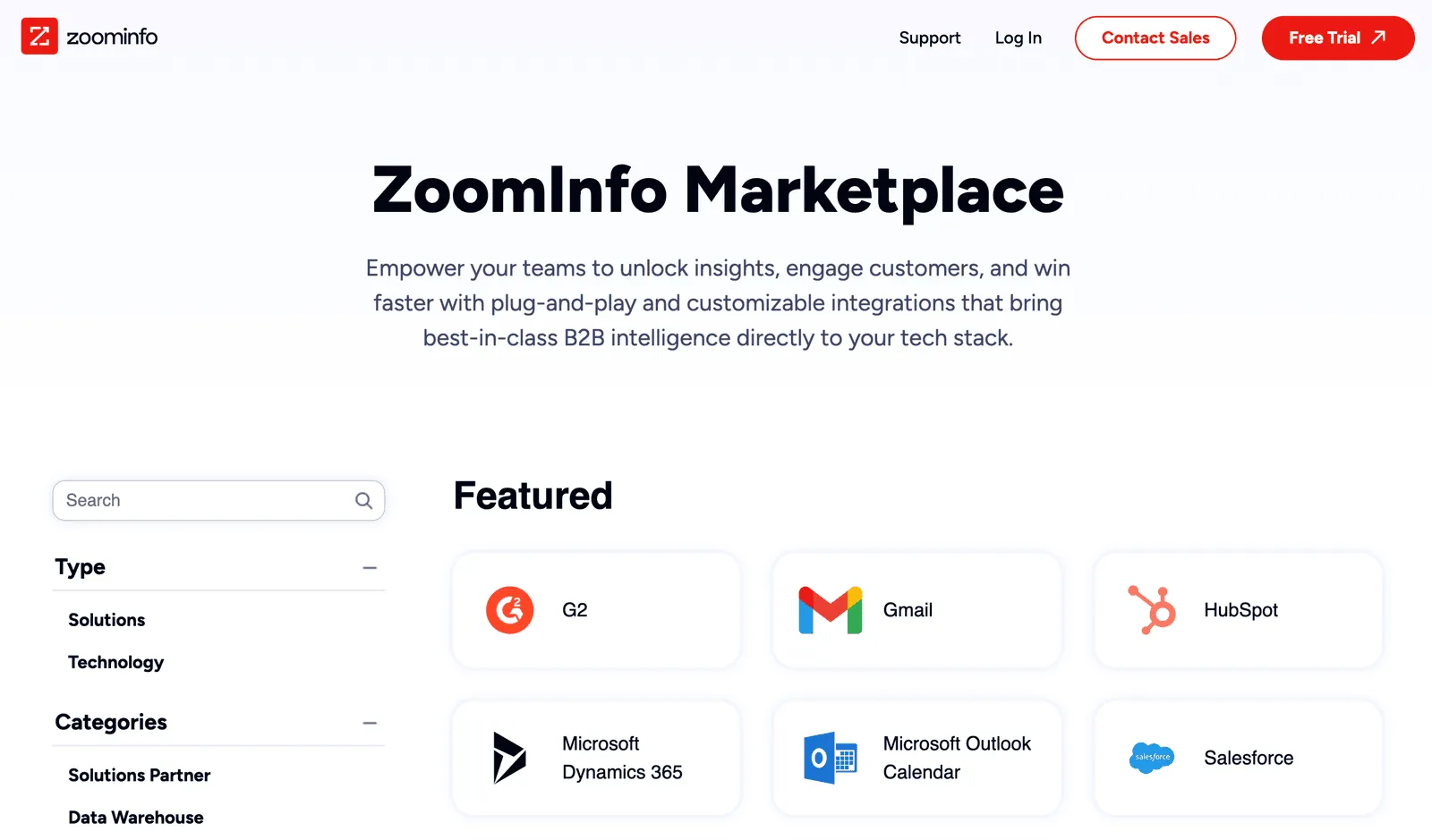
Simple design that stays out of the way
The first thing you notice is how little friction there is. Plenty of white space. Clear hierarchy. Nothing competing for attention.
That restraint matters. A marketplace should help users find solutions, not make them work for it. ZoomInfo’s design keeps the focus where it belongs, on integrations and outcomes, not UI chrome.
This is why users actually make it past the homepage.
Featured integrations that guide discovery
With more than 110 integrations available, discovery could easily become overwhelming. Instead, ZoomInfo leads with a curated set of popular integrations right on the homepage.
This isn’t guesswork. It’s a smart way to surface what most users are already looking for and help new visitors orient quickly.
For marketplace owners, this is how you shorten time to value without adding more navigation.
Categories built for how buyers think
The marketplace categories reflect real-world use cases, not internal product lines. Sales workflows. Marketing workflows. Clear groupings that mirror how teams think about their stack.
That alignment reduces cognitive load and speeds up decision-making. Users don’t have to translate categories to their needs. The marketplace already does that for them.
This is what it looks like when ecosystem structure matches buyer intent.
Listings that do real SEO work
Each integration has its own rich, detailed listing page. Clear descriptions. Benefits. Visual context. Enough depth to be genuinely useful.
These pages pull double duty. They help users evaluate integrations, and they quietly capture long-tail search demand around specific tools and workflows.
Over time, this is how marketplaces become durable acquisition channels, not just supporting pages.
Related partners that expand confidence
At the bottom of each listing, ZoomInfo surfaces related integrations. If a user is evaluating one option, they’re naturally curious about alternatives.
Instead of forcing them back to search, the marketplace keeps them moving forward. That keeps users engaged and helps them feel confident they’ve explored the landscape, not just a single option.
This is ecosystem depth working in the background.
Co-branded imagery that signals trust
Each listing clearly shows ZoomInfo alongside the partner brand. It’s a small detail, but it carries weight.
Co-branding signals legitimacy. It tells users this integration is real, supported, and intentional. That matters when integrations sit close to revenue, data, or core workflows.
Trust is built in moments like this.
A team that treats the marketplace like a product
None of this works without ongoing care. Curation. Partner enablement. Quality control.
The ZoomInfo marketplace reflects a team that treats the ecosystem as a living product, not a one-time launch. That mindset shows up everywhere, from the listings to the overall experience.
Marketplaces don’t succeed because of tooling alone. They succeed because teams invest in them.
What to take from ZoomInfo
The ZoomInfo Marketplace works because it treats the ecosystem like a product, not a page.
If you want to emulate what they’ve built, focus on a few fundamentals:
- Design for discovery first. Clear structure, intuitive categories, and featured integrations reduce friction immediately.
- Invest in listings. Rich, SEO-ready partner pages turn integrations into long-term acquisition and enablement assets.
- Guide users through the ecosystem. Related integrations and thoughtful navigation help buyers feel confident in their choices.
- Signal trust everywhere. Co-branded visuals and consistent presentation reinforce that integrations are supported and real.
- Commit to ongoing ownership. Marketplaces improve when teams treat them as living products, not launch-and-leave projects.
ZoomInfo didn’t build a marketplace to check a box. They built it to drive adoption, confidence, and ecosystem value. That’s the bar worth aiming for.
Build your marketplace
Create an integration hub with Partner Fleet that drives real adoption, not just clicks.
Book a demo
Keep reading
Browse all posts
Partner Fleet launches In-App Marketplace, bringing integration adoption inside the product
The new module gives companies a conversion-optimized integration experience for their customers, plus the analytics to prove what integrations are worth.

Partnerships in 2026: Retention is the real growth lever
Get it right early, and you'll have a great year.

How Mindbody built the #1 integrations marketplace in fitness tech
A powerhouse company with a powerhouse marketplace.