
What are API gateway tools? A practical guide for modern product teams
Nearly every choice, plus a decision matrix for you.
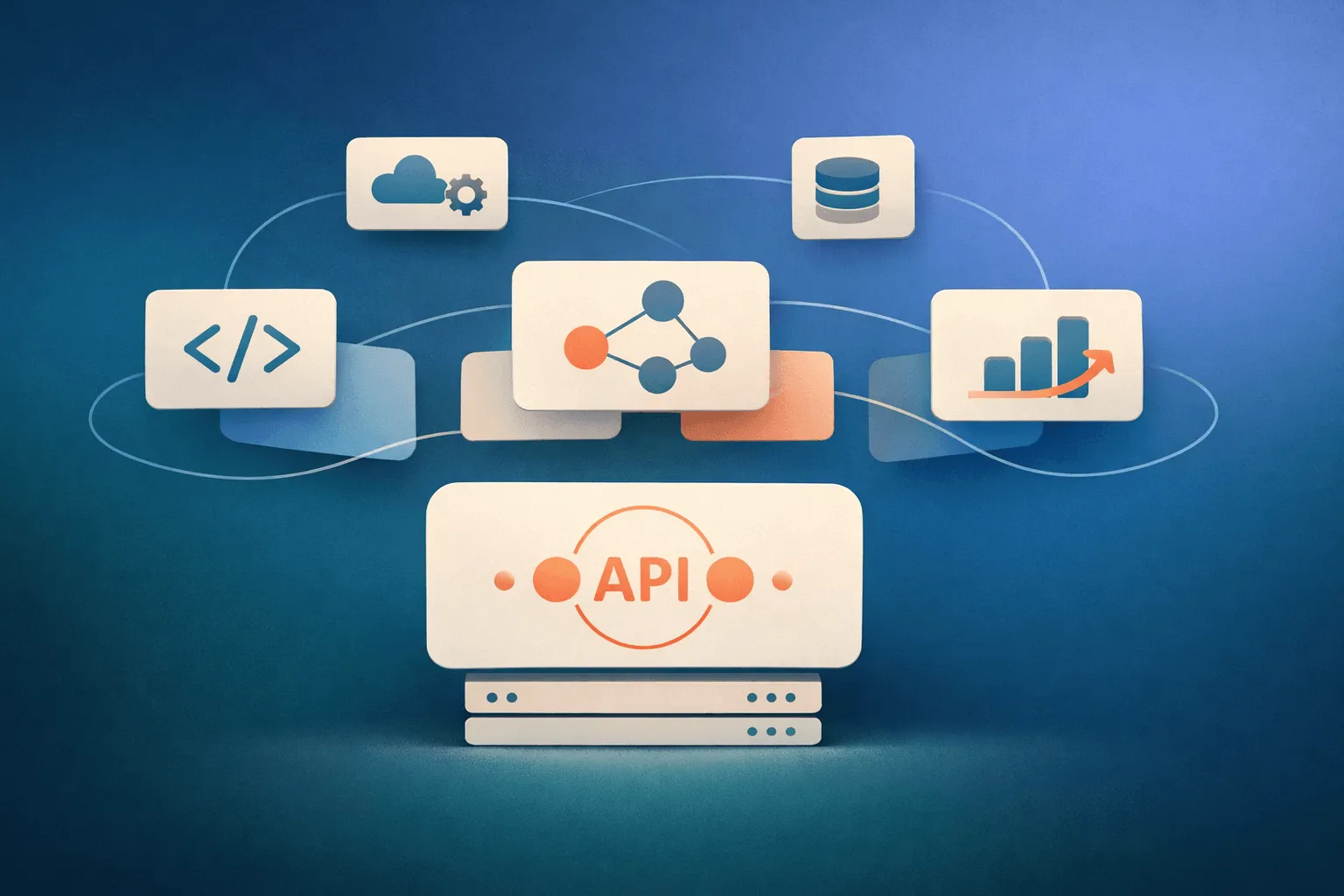
APIs are no longer a side project. They are how your product scales, integrates, and turns into a platform.
As soon as more than one client, service, or partner starts hitting your APIs, you run into the same question every team does:
How do we control, secure, and scale this without rewriting everything?
That’s where API gateway tools come in.
API gateways sit between your consumers and your backend services. Every request goes through them. That gives you a single, enforceable control layer instead of scattering logic across every service.
If you’re searching for:
- what are api gateways
- api gateway tools
- api gateway management tools
- what tools to use to implement an api gateway
- api gateway software
this guide is meant to help you actually make a decision.
What is an API gateway, in real terms
An API gateway is a traffic control layer for your APIs.
Instead of clients calling your services directly, they call the gateway. The gateway decides:
- who is allowed in
- where the request should go
- how often it can happen
- what happens if something breaks
This matters even more in microservice architectures, where dozens or hundreds of services exist behind the scenes.
Without a gateway, every service has to solve the same problems:
authentication, rate limits, retries, logging, transformations, versioning.
That does not scale.
With a gateway, those concerns live in one place.
What API gateway tools actually do
Most API gateway software includes a mix of these capabilities:
Security and access control
Authentication, authorization, API keys, OAuth, JWT validation, IP filtering, and basic threat protection.
Traffic management
Rate limiting, throttling, quotas, and spike arrest to protect your backend from abuse or runaway clients.
Routing and load balancing
Directing requests to the right service, version, or region based on rules.
Request and response transformation
Modifying headers, payloads, or formats without changing backend services.
Caching
Reducing backend load and improving latency for common requests.
Observability
Metrics, logs, tracing, and error reporting to understand API usage and health.
Some tools stop here. Others go much further into governance, portals, and lifecycle management.
That distinction matters.
When do you actually need an API gateway?
You usually need one when at least one of these is true:
- more than one service is exposed externally
- more than one team consumes your APIs
- third parties or partners access your APIs
- you need consistent auth, quotas, or policies
- you want to evolve services without breaking clients
At small scale, teams sometimes skip a gateway and regret it later. At large scale, teams that try to avoid one usually end up rebuilding one unintentionally.
An API gateway is not about complexity. It’s about containment.
Want to see how other SaaS teams are handling integrations?
Download the 2025 State of SaaS Integrations report.
Get the report
The major categories of API gateway tools
Not all API gateway tools are built for the same job. Grouping them properly makes selection much easier.
1. Cloud provider managed API gateways
These are the default choice when you are already committed to a single cloud and want minimal operational overhead.
Common options
- AWS API Gateway
- Azure API Management
- Google Cloud API Gateway and Apigee
- Cloudflare API Gateway
- Fastly API products
- Akamai API Gateway
Best for
Teams that want a managed service tightly integrated with their cloud stack.
Tradeoffs
- strong cloud lock-in
- pricing can become unpredictable at scale
- customization is limited compared to self-hosted gateways
2. Enterprise API management platforms
These are full lifecycle platforms where the gateway is just one component.
Common options
- Apigee
- MuleSoft Anypoint
- IBM API Connect
- Broadcom Layer7
- WSO2
- Axway
- Red Hat 3scale
- SAP API Management
Best for
Large organizations with governance, compliance, and monetization needs across many teams.
Tradeoffs
- heavy configuration
- slower iteration
- high cost relative to simpler gateways
These tools shine when APIs are a regulated product, not just infrastructure.
3. Gateway-first tools (open source and commercial)
This is where most platform and infrastructure teams land.
Common options
- Kong Gateway
- NGINX and NGINX Plus
- Tyk
- Apache APISIX
- KrakenD
- Gravitee
- Gloo Gateway
- Ambassador Edge Stack
- Traefik
Best for
Teams that want flexibility, performance, and control over deployment models.
Tradeoffs
- more operational responsibility
- portals and developer UX often require extra tooling
These tools are powerful, but they assume you know what you are building toward.
4. Kubernetes-native gateways
If Kubernetes is your control plane, these tools feel natural.
Common options
- Envoy Gateway
- Istio gateways
- Kong with Gateway API
- NGINX Gateway Fabric
- Gloo
- Cilium
Best for
Teams already running Kubernetes at scale and standardizing on Gateway API.
Tradeoffs
- steep learning curve
- requires strong platform engineering maturity
This approach works best when the gateway is part of a broader internal platform.
5. Building an API gateway in-house
Some teams decide to build rather than buy. There are realistic ways to do this, and unrealistic ones.
Common foundations
- Envoy
- NGINX or OpenResty
- HAProxy
Framework-based approaches
- Spring Cloud Gateway
- YARP
- Ocelot
- Custom Node or Go proxies
When this makes sense
- internal-only APIs
- very specific performance or policy needs
- platform teams with long-term ownership
When it usually fails
- public or partner-facing APIs
- developer onboarding at scale
- analytics, key management, and governance creep
Most in-house gateways start small and quietly turn into full products.
How to choose the right API gateway tool
Instead of feature checklists, ask these questions:
- Are our APIs internal, partner-facing, or public?
- Do we need deep governance or just traffic control?
- Are we optimizing for speed of setup or long-term flexibility?
- Do we want to operate infrastructure or outsource it?
- Will developers outside our company use these APIs?
Your answers matter more than brand names.
API gateway decision tree: what should you use?
| Your situation | Start with this | Why it fits | Tradeoffs |
|---|---|---|---|
| Internal APIs, low traffic, small engineering team | Lightweight gateway or in-house proxy | Centralizes auth and routing without heavy platform overhead | Limited analytics, governance, and partner readiness |
| Fully committed to AWS, Azure, or GCP | Cloud-managed API gateway | Fastest setup, tight IAM, minimal operational burden | Cloud lock-in, pricing can spike at scale |
| Microservices and Kubernetes already in place | Kubernetes-native gateway | Aligns with platform engineering workflows and Gateway API | Steeper learning curve, requires platform maturity |
| Public or partner-facing APIs | Gateway-first tool or enterprise API management | Strong policy control, versioning, and scale | More configuration and operational complexity |
| Heavy compliance, governance, or monetization needs | Enterprise API management platform | Lifecycle control across teams, regions, and products | High cost and slower iteration |
| Custom rules, hybrid or multi-cloud setup | Open-source gateway (Kong, NGINX, Tyk) | Maximum flexibility and deployment control | Requires ongoing operational ownership |
| You want partners building on your APIs | Any API gateway plus a developer portal | Gateways control traffic, portals drive adoption | Gateway alone won’t get integrations built |
API gateway tools vs developer portals
This is where teams get tripped up.
An API gateway controls traffic.
A developer portal enables people.
Gateways handle:
- routing
- security
- limits
- policies
Developer portals handle:
- discovery
- onboarding
- application registration
- credential management
- documentation
- lifecycle communication
Having APIs and docs does not mean you have a developer portal. It means you have raw materials.
How Partner Fleet works with API gateway tools
API gateways are essential. But on their own, they don’t create a platform.
They secure traffic. They don’t onboard developers.
They enforce policies. They don’t help partners ship integrations.
That’s the gap Partner Fleet fills.
Partner Fleet integrates with your existing API gateway to handle the application and ecosystem layer that gateways were never designed for.
While your API gateway manages:
- authentication and authorization
- rate limits and quotas
- routing and policies
Partner Fleet provides:
- developer and partner onboarding flows
- application creation, approval, and management
- credential and key lifecycle tied to real apps
- integration submissions and reviews
- a public and in-app app marketplace
- internal tooling to manage partners, apps, and adoption in one place
This is the difference between having APIs and having a platform ecosystem.
Most teams don’t struggle with exposing endpoints. They struggle with getting integrations built, launched, and adopted. Partner Fleet turns your API gateway into something developers can actually use, and partners can actually build on.
Curious what this looks like in practice?
See how teams pair their API gateway with a full developer portal and app marketplace.
Book a demo
API gateways as ecosystem infrastructure
The most important shift happening right now is this:
APIs are no longer just internal plumbing. They are ecosystem leverage.
An API gateway paired with a real developer portal enables:
- faster integration adoption
- safer partner access
- clearer ownership across teams
- measurable ecosystem growth
This is how SaaS companies move from integrations as features to integrations as strategy.
Final takeaway
API gateway tools are not interchangeable. They exist on a spectrum from lightweight traffic control to enterprise governance platforms.
The right choice depends on:
- who your APIs are for
- how fast you need to move
- how much ownership your team wants
Choose a gateway for control and reliability. Pair it with a developer portal when you want adoption and growth.
That combination is what turns APIs into an ecosystem.
Keep reading
Browse all posts
Partner Fleet launches In-App Marketplace, bringing integration adoption inside the product
The new module gives companies a conversion-optimized integration experience for their customers, plus the analytics to prove what integrations are worth.

Partnerships in 2026: Retention is the real growth lever
Get it right early, and you'll have a great year.

How Mindbody built the #1 integrations marketplace in fitness tech
A powerhouse company with a powerhouse marketplace.