
Integration marketplaces done well: 10 examples
From discovery and trust to ecosystem scale

The blueprint for brilliance: 10 integration marketplace examples to inspire yours
Integration marketplaces are no longer a side feature. They are a retention lever, a platform signal, and one of the clearest ways a SaaS company shows it understands how customers actually work.
A strong marketplace does more than list integrations. It demonstrates how a product fits into a broader tech stack, reduces friction across workflows, and extends value far beyond native functionality. Done well, it becomes one of the most visible expressions of ecosystem strategy.
Looking at how other companies approach this problem is often the fastest way to pressure-test your own approach. The examples below show how leading platforms design, position, and scale their integration marketplaces in practice.
What is an integration marketplace?
An integration marketplace is a centralized place to discover, evaluate, and activate integrations between a core platform and the rest of a customer’s stack.
Unlike a generic app store, an integration marketplace focuses on connections, not standalone products. The goal is not downloads, but adoption, reliability, and repeat usage inside real workflows.
At its best, an integration marketplace embeds a product into the systems customers already depend on, making it harder to replace and easier to expand. That value compounds for partners, customers, and the platform itself.
What makes a good integration marketplace?
The strongest integration marketplaces tend to share a few traits:
- Strong discoverability
Integrations are easy to find by category, use case, or system, not buried behind long lists. - Clear value per integration
Each listing explains what the integration does, why it matters, and when to use it. - Trust signals
Certification, validation, or clear ownership reduce risk, especially in regulated or operationally sensitive industries. - Thoughtful UX
The marketplace guides users from discovery to activation without confusion or friction. - Partner enablement
Partners can publish, manage, and improve listings without heavy platform involvement, keeping the ecosystem scalable.
Taken together, these elements turn a marketplace from a directory into a growth asset.
Before you browse the examples
As you look through the marketplaces below, a few patterns show up repeatedly:
- Clear “integration” language instead of generic app store branding
- Marketplaces organized around workflows or systems, not logos
- Explicit trust and certification signals
- Vertical or domain-specific focus rather than one-size-fits-all catalogs
These patterns matter more than surface-level design.
Ready to build your own integration marketplace?
You don’t need a massive engineering team or years of custom work. The same principles behind leading marketplaces can be applied with the right platform in place.
Download the guide
Top integration marketplace examples to inspire yours
1. Gong integration marketplace
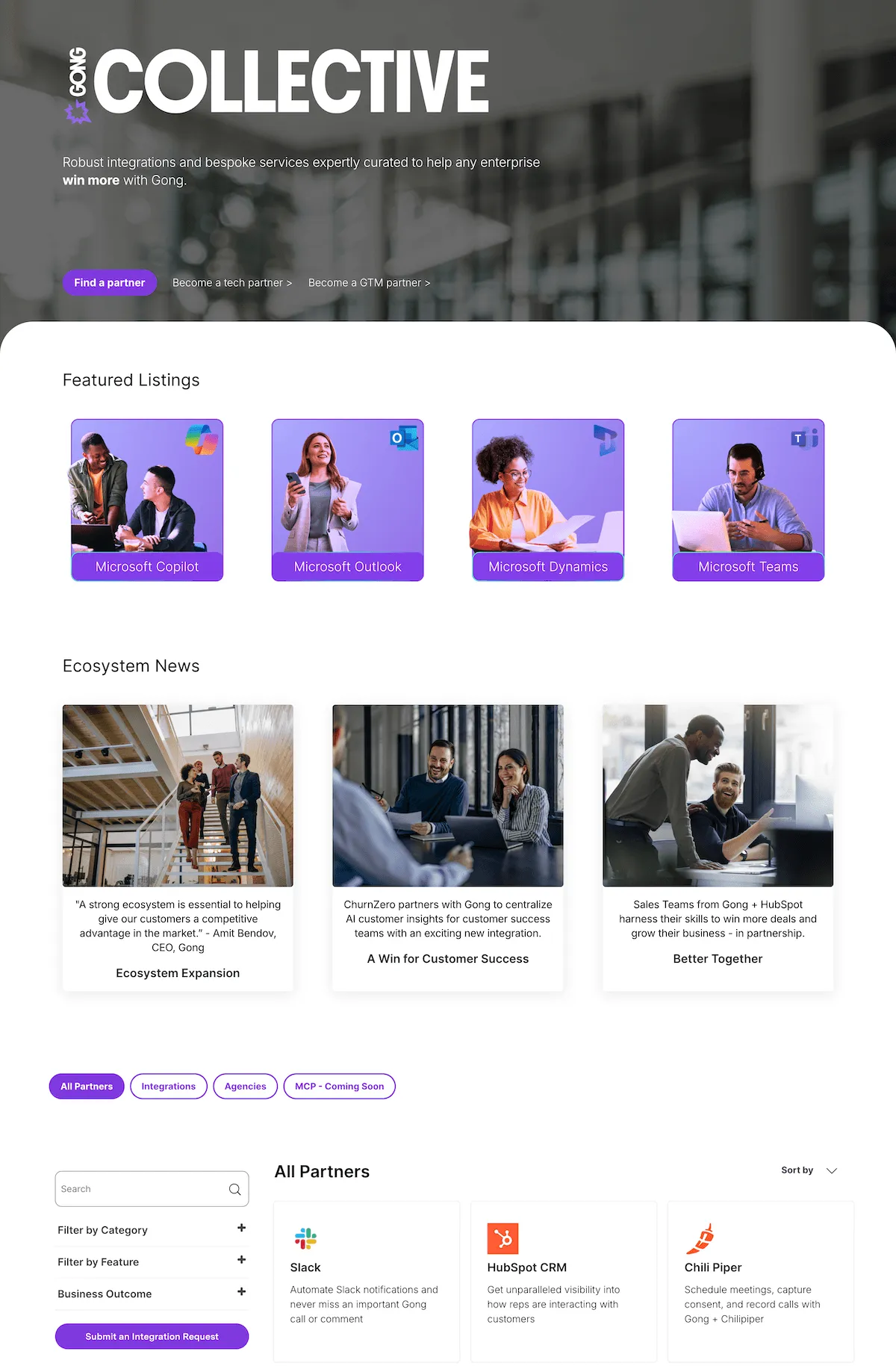
The Gong Collective focuses on integrations across sales, revenue, and customer intelligence tools.
Why it works:
Integrations are framed around revenue workflows, reinforcing Gong’s role as a system of insight rather than a standalone analytics tool.
2. ZoomInfo integration marketplace
ZoomInfo’s marketplace connects GTM data with sales, marketing, and RevOps systems.
Why it works:
The marketplace shows how data flows across the revenue stack, making integrations feel essential to execution, not optional enrichment.
3. Greenhouse integration marketplace
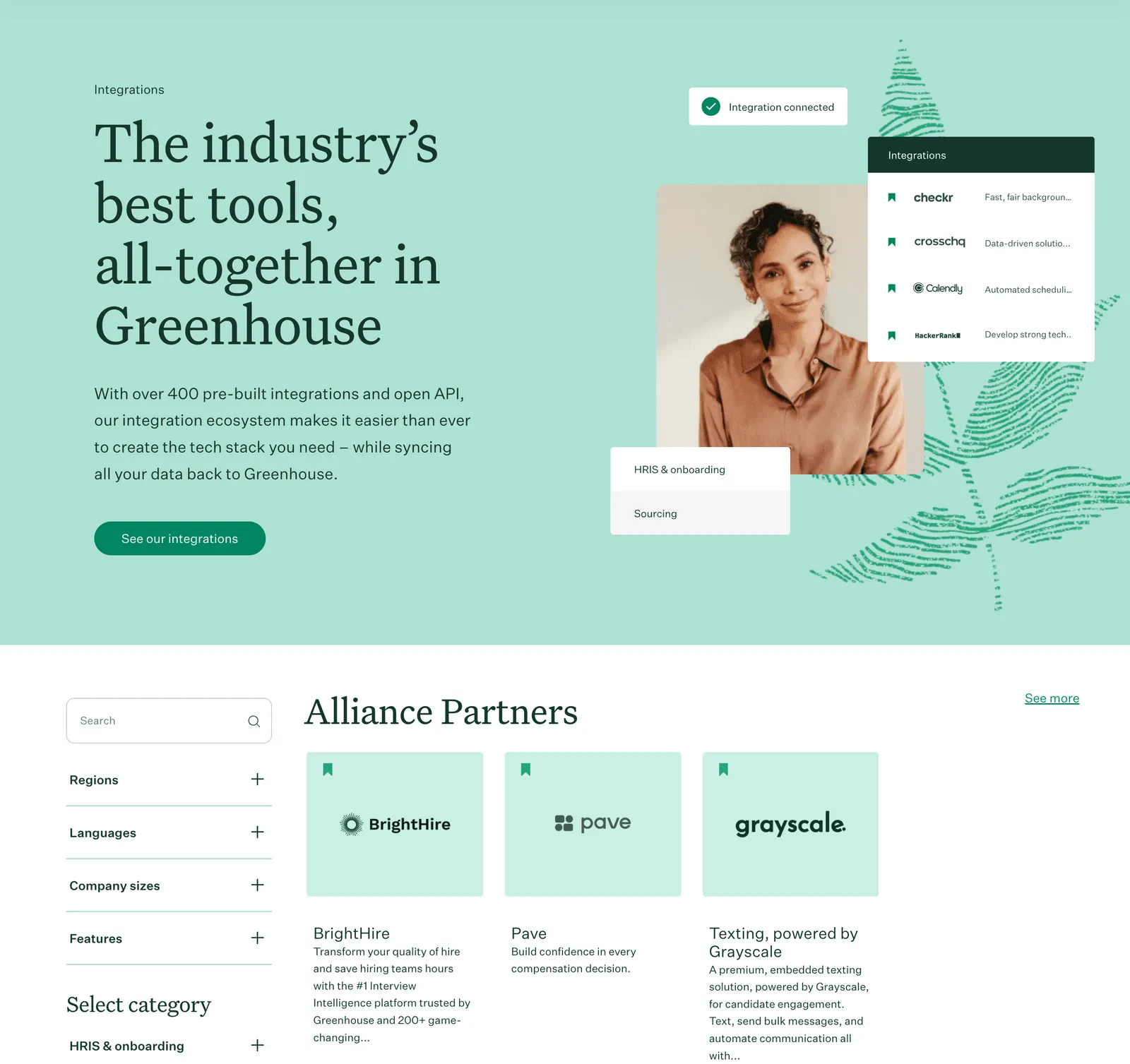
Greenhouse’s marketplace supports integrations across hiring, onboarding, and people operations tools.
Why it works:
The marketplace is organized around hiring workflows, helping teams understand how integrations support each stage of the candidate lifecycle.
4. G2 integration marketplace
G2’s marketplace supports integrations across marketing, sales, and customer intelligence platforms.
Why it works:
The marketplace reinforces G2’s role as connective tissue between buyer intent data and downstream revenue workflows.
5. Mindbody integration marketplace
Mindbody’s marketplace connects scheduling, payments, marketing, and client management tools for fitness and wellness businesses.
Why it works:
Integrations are organized around daily operational workflows, helping businesses run their studios without stitching systems together manually.
6. Workday integration marketplace
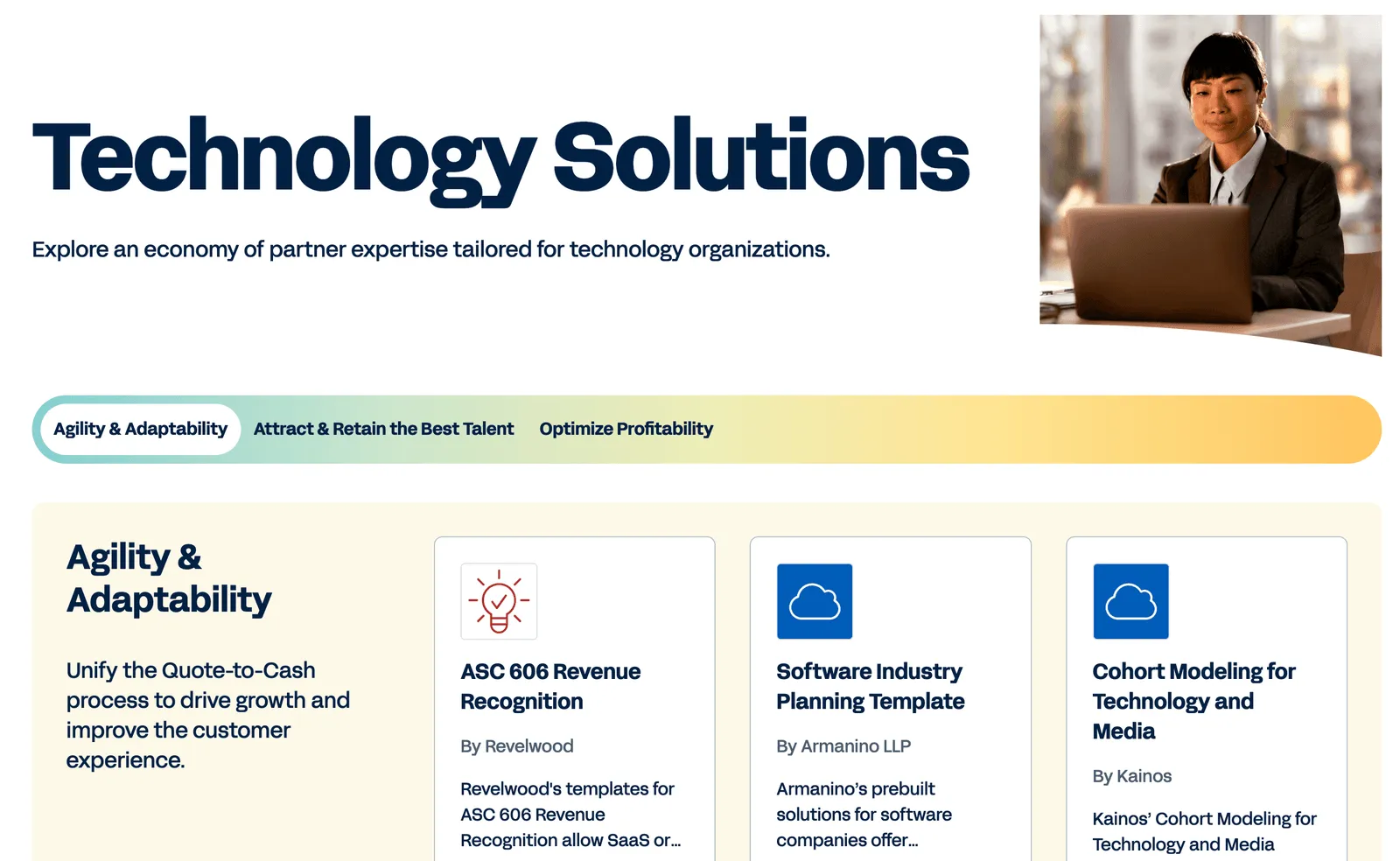
Workday’s marketplace is one of the clearest examples of an integration-first ecosystem. It focuses heavily on certified HR, finance, and payroll integrations.
Why it works:
The marketplace prioritizes trust and clarity, which is critical when integrations touch payroll, benefits, and financial data.
7. ServiceNow store
ServiceNow positions its marketplace as a discovery layer for ITSM, workflow automation, and enterprise system integrations.
Why it works:
Integrations are framed around operational outcomes, helping teams understand how connections streamline complex workflows.
8. Cornerstone integration marketplace
Cornerstone’s marketplace supports learning, performance, and HR system integrations.
Why it works:
It brings together multiple employee experience systems into a single extension of the platform.
9. Blackbaud integration marketplace
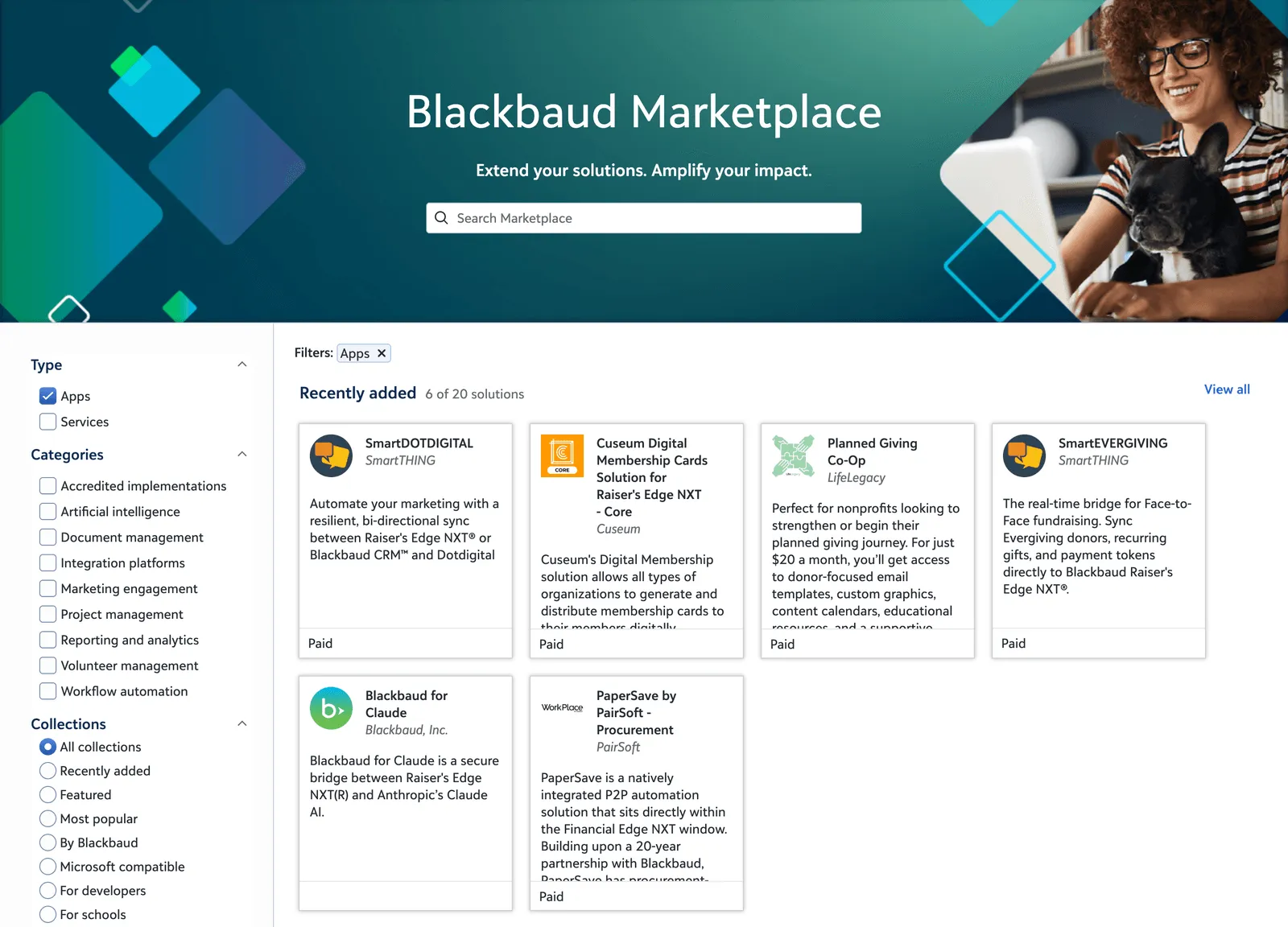
Blackbaud’s marketplace supports integrations for nonprofit and education organizations.
Why it works:
The marketplace emphasizes purpose-built integrations that align closely with mission-driven workflows.
10. Paylocity integration marketplace
Paylocity’s marketplace supports integrations across payroll, HR, and workforce tools.
Why it works:
The marketplace is designed around systems teams already rely on, keeping discovery practical and use-case driven.
The takeaway: your integration marketplace is a strategic asset
These integration marketplace examples show a clear pattern. The strongest marketplaces are not after breadth for its own sake. They are designed to drive adoption, reinforce trust, and extend platform value through real workflows.
An integration marketplace is often one of the simplest ways to improve retention, strengthen partner ecosystems, and position a product as a platform rather than a point solution.
While many of these companies invested heavily in custom builds, the capabilities that make their marketplaces effective are now available out of the box. Platforms like Partner Fleet make it possible to launch and scale an integration marketplace without years of engineering effort.
If an integration marketplace is not part of your product strategy, it is likely one of the highest-leverage opportunities still on the table.
Your integration marketplace shouldn’t be hard to build or hard to manage.
Let’s show you a better way.
Book a demo
Keep reading
Browse all posts
Partner Fleet launches In-App Marketplace, bringing integration adoption inside the product
The new module gives companies a conversion-optimized integration experience for their customers, plus the analytics to prove what integrations are worth.

Partnerships in 2026: Retention is the real growth lever
Get it right early, and you'll have a great year.

How Mindbody built the #1 integrations marketplace in fitness tech
A powerhouse company with a powerhouse marketplace.