Even great AI products will fail without an integration ecosystem
Why integration adoption is the real unlock for AI product success.
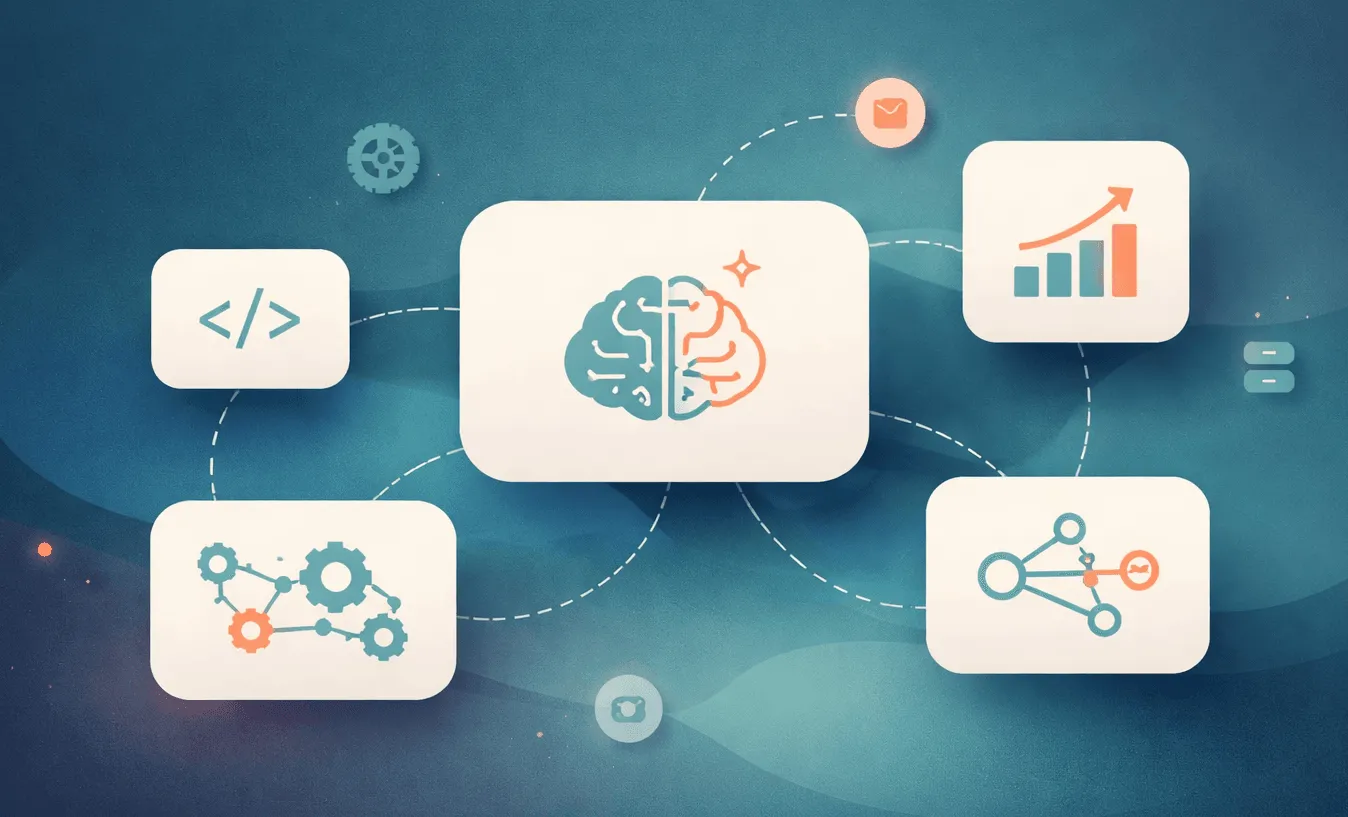
Your AI product won’t fly solo
You’ve built something impressive. Your AI product is genuinely smart and solves a real problem.
But here’s the uncomfortable truth most teams learn too late. If your AI lives outside the tools people already use, it won’t get adopted. It becomes a demo feature, not infrastructure.
For AI products, adoption equals integration adoption. If it doesn’t show up inside existing workflows, it doesn’t stick.
How teams actually use AI today
AI is everywhere in B2B SaaS now. Sales teams use it to draft emails and summarize calls. Marketing teams generate content and segment audiences. Support teams rely on AI to deflect tickets and surface insights. Developers use copilots to move faster.
The problem isn’t capability. It’s friction.
If AI output has to be copied, exported, re-uploaded, or re-contextualized, the “magic” wears off fast. Every manual step lowers usage. And low usage kills perceived value.
AI only works when it flows.
Where AI products break down in the tech stack
Modern SaaS stacks are messy by default. Dozens of tools, each with a job to do.
When an AI product sits outside that ecosystem, it creates more work instead of removing it. Context gets lost. Data gets stale. Automation turns into another checkbox.
This is where most AI products stall. Usage looks good in isolation, but SaaS integration adoption metrics tell a different story. Users test the feature, but they don’t embed it into daily operations.
That gap is the difference between novelty and necessity.
What good AI integrations actually look like
A standalone AI meeting summarizer is fine.
An integrated one is transformative.
Connected to your calendar, recording tool, and project management system, it can automatically transcribe meetings, extract decisions, assign tasks in Jira or Asana, and notify the right people. No copy-paste. No chasing notes.
Same with AI design tools. Generating visuals is useful. Pushing them directly into Figma, Canva, or your asset library is what makes them operational.
Integrations turn AI from an assistant into infrastructure.
Get an AI agent marketplace
Want a marketplace just for AI agents within your product? Learn more about buidling it on Partner Fleet.
Showcase AI Agents
Should you build every integration yourself?
You already know the answer.
Trying to build and maintain every integration is a losing game. The surface area grows faster than your team can keep up, and your roadmap gets hijacked by edge cases.
The scalable path is opening your APIs and letting the ecosystem do the work.
When partners and developers can build on top of your product, partner-led adoption accelerates. New use cases appear without your team writing every line of code. Marketplace adoption becomes a growth lever, not a maintenance burden.
This is how AI products scale without collapsing under their own ambition.
Developer portals and integration marketplaces are crucial
APIs alone aren’t enough.
A strong developer portal gives builders what they need to succeed. Clear documentation, SDKs, examples, and a place to experiment. Good DX directly correlates with better integrations and faster time to value.
An integration marketplace solves the discovery problem. It gives users a trusted place to find, install, and manage integrations that extend your product. It also gives partners visibility and incentive to keep building.
Together, they drive real adoption. Not feature usage, but embedded usage. That’s where stickiness comes from. That’s where ecosystem ROI shows up.
Your AI becomes the system of intelligence inside a broader ecosystem, not another tab people forget to open.
Real-world proof
This is why platforms like HubSpot invested so heavily in their marketplace. The value compounds as integrations grow.
It’s why tools like Zapier and Make exist at all. The connective tissue matters as much as the intelligence.
The AI race isn’t just about better models. It’s about better integration strategy.
Unlock your AI agent marketplace
Ready to scale your AI product’s impact? A ready-made integration marketplace and developer portal get you there faster, without pulling your team off core product work.
AI products don’t win by being smart in isolation. They win by fitting cleanly into the tools people already rely on.
Prioritize integration. Invest in ecosystem infrastructure. Measure adoption where it actually happens.
If you want to see what this looks like in practice, book a demo and we’ll walk through it.
Get a Partner Fleet demo
See the full functionality behind our developer portal and marketplace product.
Book a demo
Keep reading
Browse all posts
How Phenom turned 200 idle partners into $500K+ in partner program revenue
How Phenom built a tiered partner program and earned $500k+ in partner program revenue in under one year.

Partner Fleet launches In-App Marketplace, bringing integration adoption inside the product
The new module gives companies a conversion-optimized integration experience for their customers, plus the analytics to prove what integrations are worth.

Partnerships in 2026: Retention is the real growth lever
Get it right early, and you'll have a great year.