
API developer portals: Why your product team needs one
An API developer portal isn't just a tech tool—it's a growth strategy.
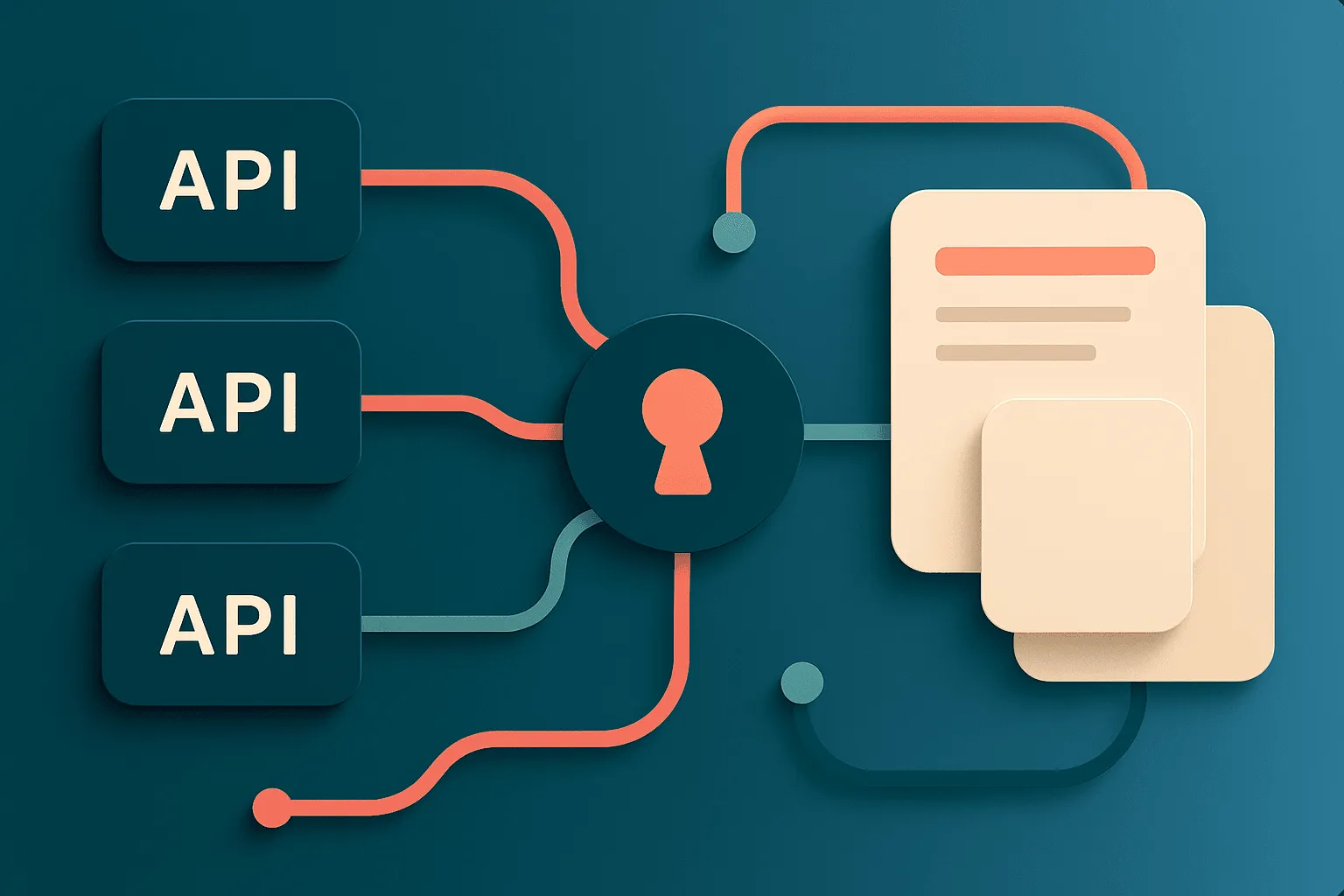
As product teams, we’re always making tradeoffs. New features versus backlog debt. Time-to-value versus long-term scalability. And integrations tend to sit right in the middle of that balancing act.
Your customers expect your product to plug into their workflow without friction. That means clean, stable APIs and a clear path for developers to build with them. When that path isn’t obvious, everything slows down: partners, customer teams, even your own engineers.
That’s the job of an API developer portal. Not a marketing site, not a help center, but the operational engine behind your integration ecosystem.
Let’s break down what it actually is, who it’s for, and why modern product teams rely on it as core infrastructure.
What is an API developer portal?
An API developer portal is a self-serve environment where developers get everything they need to evaluate, authenticate, build, test, and manage integrations with your product. It’s usually a standalone site or microsite, built for a very specific job: reduce integration friction to as close to zero as possible.
A complete API developer portal includes:
Documentation that looks like a product surface, not an afterthought.
Guides, references, and walkthroughs that explain the API in plain language. Filterable endpoints, code samples, error handling guidance, rate limits, pagination rules, webhook behavior. No guesswork.
Authentication and key management.
Secure, self-serve workflows to generate, rotate, and revoke API keys or OAuth credentials. Clear scope and permission definitions.
An interactive API explorer or sandbox.
A test environment where developers can run real API calls, see responses, and validate assumptions without risking customer data.
Versioning, changelogs, and deprecation signals.
Developers need clarity on what’s new, what’s stable, and what’s going away.
SDKs and code samples.
Ready-to-run snippets, example apps, and idiomatic libraries to reduce friction and speed up implementation.
Support workflows.
Troubleshooting guides, contact paths, partner submission flows, and FAQs that keep developers moving without bottlenecks.
A strong portal is really about one thing: lowering the cost of building on your platform.
Want to see what a modern third-party developer portal looks like?
Check out Partner Fleet.
Let's talk
Who uses an API developer portal?
It’s not just for “developers.” It’s the shared connective tissue between your product, your partners, and your customer teams.
- Third-party developers use it to evaluate your API surface and build integrations or apps.
- Product managers use it to understand your extensibility and shape roadmap decisions.
- Customer success and solutions teams use it to guide customers through integration possibilities.
- Internal engineers rely on it as the source of truth rather than scattered tribal knowledge.
When done well, the portal becomes the contract for how your product integrates with the outside world.
Why your product team needs it (and your customers will thank you)
1. It gives you scalable integration capacity
A developer portal turns integration building from a high-touch process into a self-serve one.
2. It reduces support and troubleshooting load
Clear docs and predictable responses mean fewer tickets and faster unblock paths.
3. It accelerates partner-built integrations
Partners can’t wait on your engineering team. They need clarity, stability, and tools that let them ship fast.
4. It improves product stickiness
The more naturally your product fits into a customer’s stack, the harder it is to replace.
5. It keeps your API surface honest
Public documentation forces clarity, consistency, and long-term architectural discipline.
6. It becomes the backbone of your ecosystem
You can’t run a partner marketplace or integration ecosystem without a strong developer experience behind it.
Should you build your own API developer portal?
Short answer: probably not. Most teams underestimate the complexity.
Maintaining a portal means owning:
- Authentication and key management
- Sandbox environments
- Documentation engines + versioning
- Endpoint explorers
- Secure hosting and compliance
- Permissioning and user management
- Partner submission workflows
- Constant updates to match your API surface
Unless you’re a platform-first company with dedicated DX resources, this becomes expensive fast. And developers will compare your portal to Stripe, Shopify, and HubSpot—not whatever you can build in a sprint.
Instead, many SaaS companies use external developer portal infrastructure, which gives them a maintained, scalable foundation without diverting engineering cycles. Your team focuses on the API itself, not the scaffolding around it.
A well-run API developer portal is a strategic choice, not a side project.
Ready to upgrade your developer experience?
Get an out-of-the-box environment for API docs, key management, API explorers, and partner-built integration submissions—all without the overhead of building one yourself.
Book a demo
Keep reading
Browse all posts
Partner Fleet launches In-App Marketplace, bringing integration adoption inside the product
The new module gives companies a conversion-optimized integration experience for their customers, plus the analytics to prove what integrations are worth.

Partnerships in 2026: Retention is the real growth lever
Get it right early, and you'll have a great year.

How Mindbody built the #1 integrations marketplace in fitness tech
A powerhouse company with a powerhouse marketplace.