10 things the Zapier app marketplace got oh-so-right
Why the Zapier app marketplace feels calm, intentional, and practical.
Most people think of Zapier as an automation tool.
That’s true. But it’s also incomplete.
Zapier isn’t powerful because it connects apps. It’s powerful because of how it presents those connections. The app marketplace isn’t a side feature or a nice-to-have. It is the product.
If you’re building an app marketplace, an integrations hub, or anything resembling an ecosystem surface, Zapier is worth studying. Not because you should copy it outright, but because it shows what happens when a marketplace is treated as core infrastructure instead of supporting content.
Let’s break down what they get right.
Why Zapier’s marketplace is different (it is the product)
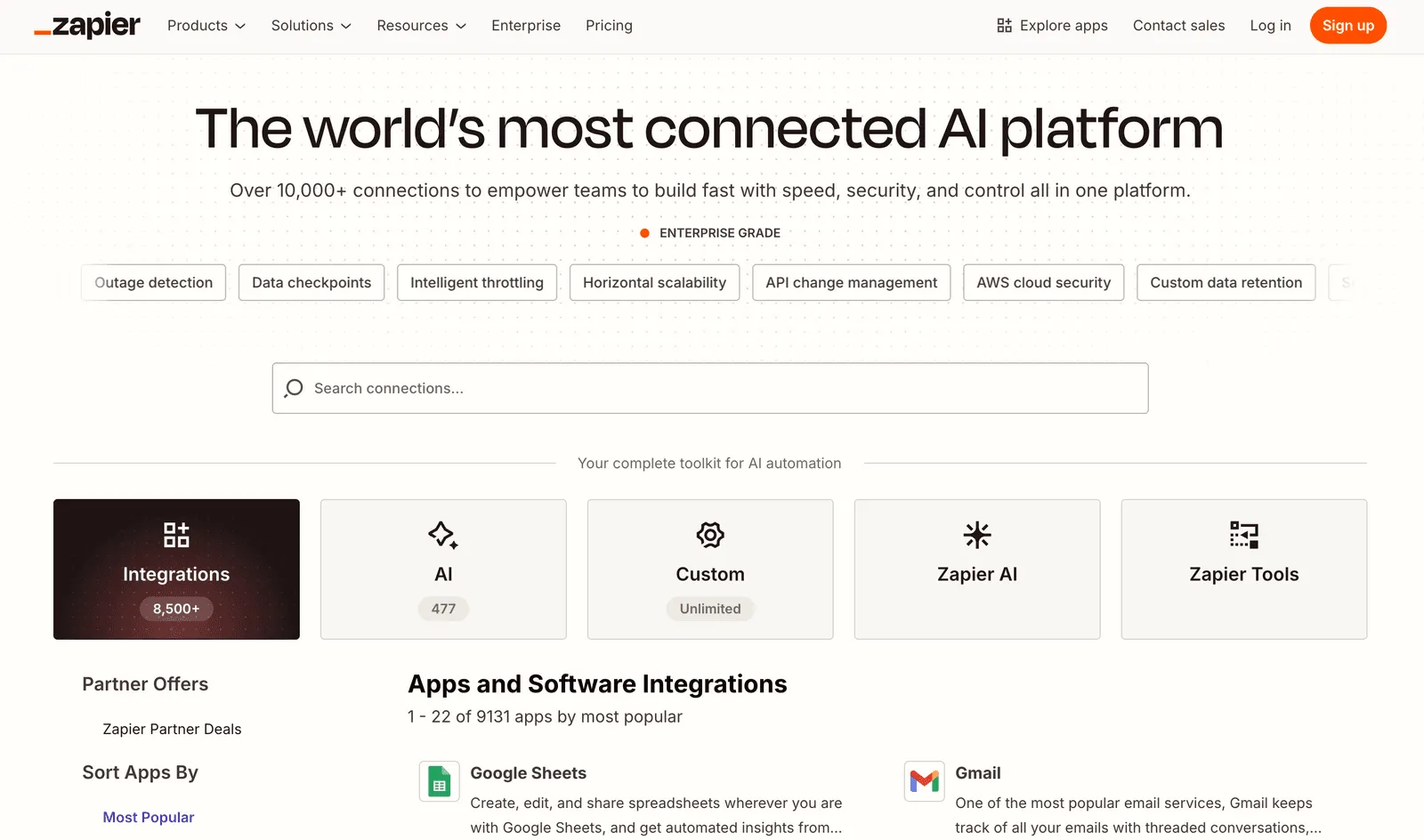
Here’s the reality: without its marketplace, Zapier doesn’t work.
As an iPaaS, the value of the platform is entirely dependent on the breadth and usability of its integrations. The apps aren’t accessories. They’re the reason customers show up in the first place.
That mindset shows up everywhere in the marketplace.
Instead of generic integration descriptions, Zapier leans hard into templates. These aren’t feature lists. They’re real, concrete examples of problems you can solve by connecting tools together.
The framing shifts from:
“Here’s what this integration is”
to
“Here’s what you can actually do with it”
That’s a critical difference. It reduces cognitive load and gets users to value faster. It also signals something important internally: this marketplace is not an afterthought. It’s clearly owned, designed, and continuously invested in like a core product surface.
How partners help Zapier scale without sacrificing quality
One of the smartest decisions Zapier made was pushing meaningful content creation to partners, while still controlling the outcome.
When a partner builds an integration, they’re expected to contribute templates. Not marketing fluff, but real workflows that demonstrate value.
This does a few things at once:
- Zapier doesn’t have to invent every use case themselves
- partners get direct visibility tied to real outcomes
- customers immediately see how an integration fits into their world
This is the part most SaaS marketplaces miss.
They ask partners to submit a logo and a paragraph. Zapier asks them to help users succeed. The result is a marketplace that scales in volume without degrading in usefulness.
That’s not accidental. That’s ecosystem design.
What actually works from a design and UX perspective
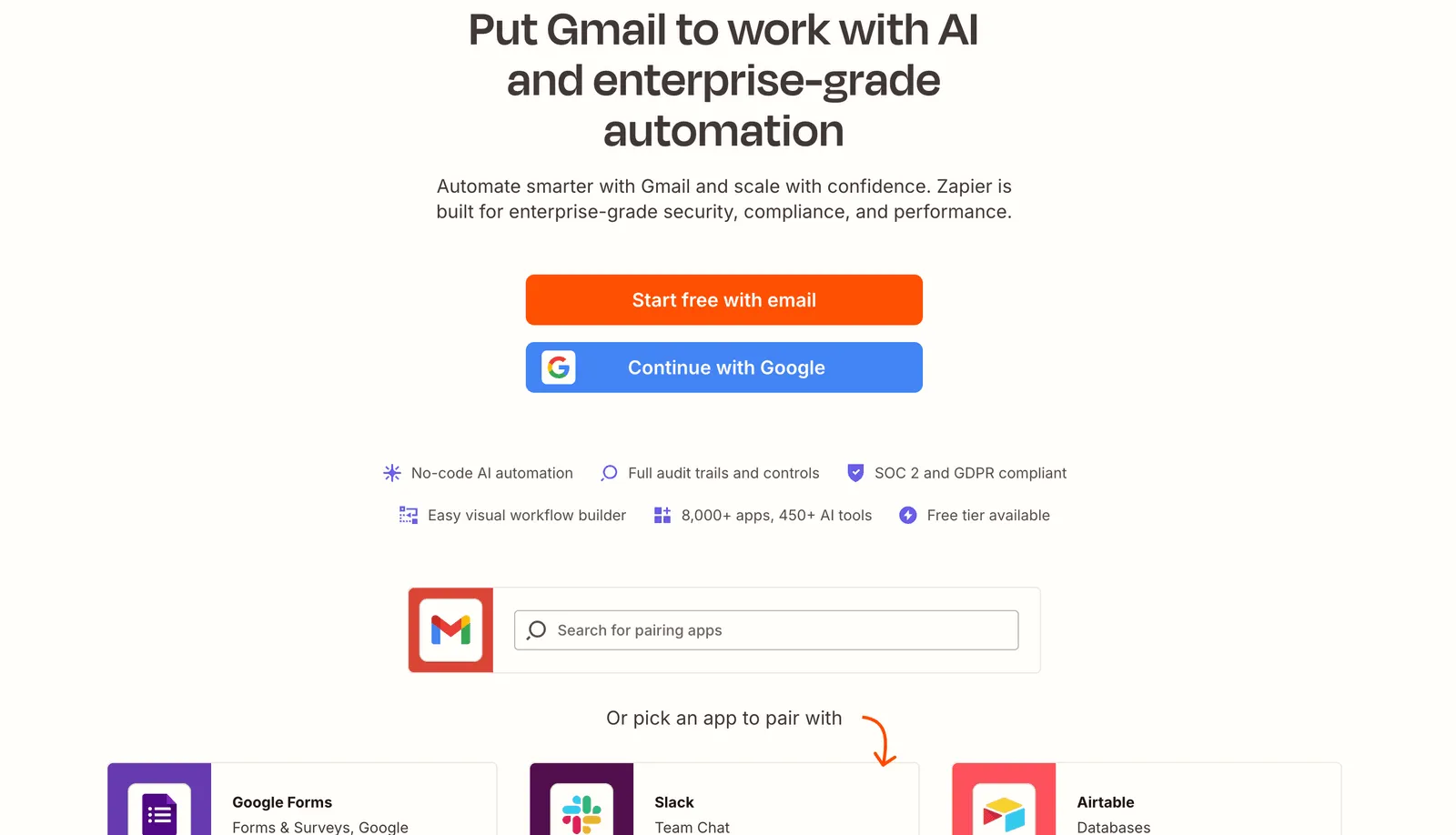
The Zapier app marketplace feels calm, intentional, and practical. Every design choice seems optimized around one goal: helping users decide quickly and confidently.
A few things they do especially well:
The branding is clean and restrained. There’s very little visual noise, which matters when you’re browsing thousands of apps.
The top-level navigation is clear and purposeful. Integrations, AI, custom building, and Zapier tools each behave slightly differently, but none of it feels confusing. The structure matches user intent.
Categories are simple and genuinely helpful. They narrow the field without over-segmenting. Featured apps are highlighted tastefully, not shoved in your face.
Plan requirements are visible upfront. Premium-only integrations are clearly labeled, which saves time and prevents frustration later.
Getting started is fast. Clear sign-up calls to action and SSO options reduce friction and get users into workflows quickly.
Each app listing surfaces key value signals immediately, things like:
- no-code AI automation
- audit trails and controls
- SOC 2 and GDPR compliance
- visual workflow builder
- free tier availability
You don’t have to hunt for answers. The marketplace answers the obvious questions before you ask them.
One especially strong detail: within an integration listing, you can search for another tool to see if it connects. That small interaction saves users from bouncing around and keeps them oriented.
Even the language is thoughtful. Calls to action like:
- request an app
- add an app
- explore the developer platform
- find experts
Each one maps cleanly to a different persona. Customers, partners, and developers all know where to go next without being overwhelmed.
What this means if you’re building your own marketplace
Zapier is an extreme example. Most SaaS companies don’t need this level of complexity on day one.
But the principles absolutely apply.
Treat your marketplace like a product, not a page. Design for outcomes, not descriptions. Let partners contribute real value, not just content. Make expectations obvious. Reduce friction everywhere you can.
Most importantly, don’t try to brute-force this in-house unless you’re prepared to staff and maintain it like Zapier does.
You can build a marketplace that follows these principles on Partner Fleet, without starting from scratch or duct-taping CMS pages together. The goal isn’t to copy Zapier. It’s to apply the same thinking in a way that fits your product and your ecosystem.
If you want to see what that looks like in practice, book a demo and we’ll walk through how to build a marketplace that actually works, for your customers and your partners.
Build once. Scale integrations forever.
Build a portal for your third-party developers, fast.
Book a demo
Keep reading
Browse all posts
Partner Fleet launches In-App Marketplace, bringing integration adoption inside the product
The new module gives companies a conversion-optimized integration experience for their customers, plus the analytics to prove what integrations are worth.

Partnerships in 2026: Retention is the real growth lever
Get it right early, and you'll have a great year.

How Mindbody built the #1 integrations marketplace in fitness tech
A powerhouse company with a powerhouse marketplace.